Autoriarhiiv: sanhei

Multifunctional layered clothing

Hiking websites recommend wearing layers, because these make adjusting between warm and cold weather or uphill and downhill walking simple. One thick garment would only work for cold, but taking it off when it gets too hot may leave only too thin clothing.

The same principle of layers applies for everyday clothes. My office is 12 degrees in winter mornings, so I wear two pairs of pants, sometimes two vests and a fleece. Instead of one thick pair of pants that would only suit cold temperatures, thin pants can be worn singly in warm weather and doubled up in cold.

For cycling in the cold, shorts can be worn under long athletic slacks. This principle should also work for hats – two thin fleece ski caps instead of one thick, but I have not tested it. Similarly, two pairs of socks. Although, just like with thick socks, if doubled socks make the shoes fit too tightly, then the reduced circulation increases the cold feeling.

Toe warmer making instructions on the internet suggest using the cut-off front parts of old socks. A more multifunctional option is to roll back existing socks halfway, so both the toe and the ankle part of the sock cover the toes, as in the following image.
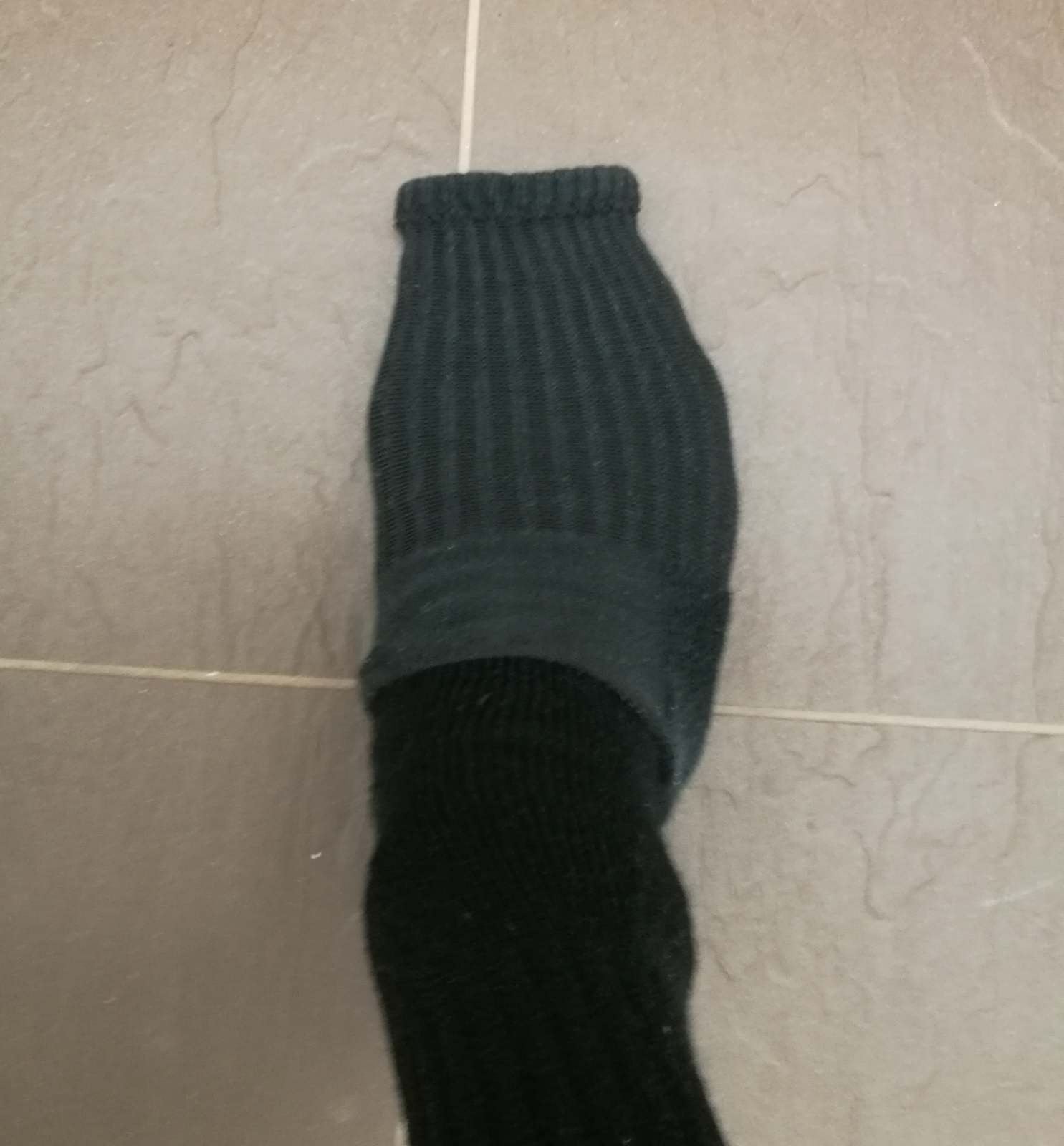
Cut socks only work as toe warmers, but rolled-back socks can be used year round.

Volunteer work is less efficiently allocated than paid work

In my experience, the labour of volunteers and low-wage workers is frequently wasted, just like other free or cheap resources. Unlike for expensive market work, there are no price signals to guide people to the most important tasks first. If activities are not prioritised based on how productive these are, then randomly allocating labour is likely to select work with low usefulness.

Within an organisation, competent managers of volunteers may direct them to the most productive work, but even with the best leaders managing some volunteering opportunities, it remains unclear which organisations do the most good and thus should get priority labour. There is a limited amount of work hours available, just like other resources. Even the best volunteers cannot do everything at once, so to maximise social welfare, the most helpful tasks should be done first. In market work, the employer at which a worker is most productive is generally willing to pay the most for this person’s services. Then if people follow the money, their labour gets allocated to the highest-value tasks.

Of course, markets are not perfect and the importance of some work is not accurately measured in money, but for reasonably rational agents, a noisy signal is better than no signal. Prices carry information and help efficient allocation of resources. One way to better allocate volunteer labour is to establish a pseudo-money for unpaid work: each nonprofit organisation gets a certain amount of credits initially and can spend these to “hire” voluntary workers. Credits used for one person cannot be used for another, so the organisation willing to give away the most for a given individual’s services is probably the one receiving the greatest benefit from that person. Volunteers can then use the credits offered to judge where they would be the most productive (could do the greatest amount of good).

Blind testing of clothes

Inspired by blind taste testing, manufacturers’ claims about clothes could be tested by subjects blinded to what they are wearing. The test would work as follows. People put clothes on by feel with their eyes closed or in a pitch dark room and wear other clothes on top of the item to be tested. Thus the subjects cannot see what they are wearing. They then rate the comfort, warmth, weight, softness and other physical aspects of the garment. This would help consumers select the most practical clothing and keep advertising somewhat more honest than heretofore. For example, many socks are advertised as warm, but based on my experience, many of them do not live up to the hype. I would be willing to pay a small amount for data about past wearers’ experience. Online reviews are notoriously emotional and biased.

Some aspects of clothes can also be measured objectively – warmth is one of these, measured by heat flow through the garment per unit of area. Such data is unfortunately rarely reported. The physical measurements to conduct on clothes require some thought, to make these correspond to the wearing experience. For example, if clothes are thicker in some parts, then their insulation should be measured in multiple places. Some parts of the garment may usually be worn with more layers under or over it than others, which may affect the required warmth of different areas of the clothing item differently. Sweat may change the insulation properties dramatically, e.g. for cotton. Windproofness matters for whether windchill can be felt. All this needs taking into account when converting physical measurements to how the clothes feel.

Keeping an open mind and intellectual honesty

„Keep an open mind” is often used as an argument against science, or to justify ignoring evidence more broadly. Let’s distinguish two cases of keeping an open mind: before vs after the evidence comes in. It is good to keep an open mind before data is obtained – no hypothesis is ruled out. In reality, all possibilities have positive probability, no matter how great the amount and quality of information, so one should not dogmatically rule out anything even given the best evidence. However, for practical purposes a small enough probability is the same as zero. Decisions have to be made constantly (choosing not to decide is also a decision), so after enough scientific information is available, it is optimal to make up one’s mind, instead of keeping it open.
Intellectually honest people who want to keep an open mind after obtaining evidence would commit to it from the start: publicly say that no matter what the data shows in the future, they will ignore it and keep an open mind. Similarly, the intellectually honest who plan to make up their mind would also commit, in this case to a policy along the lines of „if the evidence says A, then do this, but if the evidence says B, then that”. The latter policy resembles (parts of) the scientific method.
The anti-science or just intellectually dishonest way of “keeping an open mind” is to do this if and only if the evidence disagrees with one’s prior views. In other words, favourable data is accepted, but unfavourable ignored, justifying the ignoring with the open mind excuse. In debates, the side that runs out of arguments and is about to lose is usually the one who recommends an open mind, and only at that late stage of the debate and conditional on own weak position. Similarly, “agreeing to disagree” is mostly recommended intellectually dishonestly by the losing side of an argument, to attempt to leave the outcome uncertain. This is an almost logically contradictory use of “agreeing to disagree”, because it is mathematically proven that rational agents putting positive probability on the same events cannot agree to disagree – if their posterior beliefs are common knowledge, then these must coincide.

Volunteer parking wardens may benefit the environment

Reducing the utility from car use and ownership motivates substitution towards other forms of transportation, which benefits both the environment and public health. One way to cut the convenience of driving is enforcing parking regulations, because drivers have to park further from their destination when the option of illegal parking becomes less attractive. Parking at a greater distance also makes people walk more – a minor health benefit.

Enforcing speed limits and other traffic rules that slow cars down increases the time cost of driving. This may reduce wear and tear on vehicles and roads, which benefits the environment.

An implication of is that people who want to reduce global warming or improve public health should become volunteer parking wardens and traffic police by reporting parking violations, speeding and dangerous driving (preferably with photo or video evidence from phones or dashboard cameras).

A possible countervailing effect of the enforcement of parking rules occurs if the illegally parked cars obstruct the movement of other cars enough to motivate some people to switch away from driving. Then stopping the parking violations may open the road up enough to encourage more use of cars, with an overall negative environmental and health effect. Similarly, if reckless drivers make the roads unsafe enough to reduce others’ car use, then making traffic civil again may attract risk-averse people back to driving. However, in most developed countries, illegal parking and the ignoring of rules of the road is not severe enough to deter driving significantly, so better enforcement is likely to reduce car use.

Slowing traffic down may increase congestion and emissions per kilometre travelled if there is little substitution away from driving. Again, in developed countries public transit and cycling are usually feasible options. Of course, some people always find excuses not to use these, and in remote rural areas public transit may indeed be economically unreasonable and distances may really be too great for bikes. Electric bikes are then an option. These increase the range of travel with less pollution and congestion than cars.

Political parties claim inconsistent patience

If the stated preferences of politicians are taken at face value, then they have inconsistent patience across different policy areas. Left-wingers want to invest in education, infrastructure and prevention of climate change. These investments have a present cost and a long-delayed benefit, which suggests patient preferences (high discount factor, low discount rate). On the other hand, the left wants to increase borrowing, redistributive transfers and government spending in general, which have a current benefit (including electoral, but focus on societal for now) and a future cost. Preferring a current benefit and a future cost implies impatience.

For right-wing parties, these preferences are switched (impatient on education, climate, but patient on redistribution), so their inconsistency is the mirror image of the one described above. In summary, both sides of the political divide claim policy preferences that simultaneously imply patience and impatience, which suggests motives other than societal benefit. One way to reason about these other motives is described in https://sanderheinsalu.com/ajaveeb/?p=1015

M-diagram of politics

Suppose a politician claims that X is best for society. Quiz:

1. Should we infer that X is best for society?

2. Should we infer that the politician believes that X is best for society?

3. Should we infer that X is best for the politician?

4. Should we infer that X is best for the politician among policies that can be `sold’ as best for society?

5. Should we infer that the politician believes that X is best for the politician?

This quiz illustrates the general principle in game theory that players best-respond to their perceptions, not reality. Sometimes the perceptions may coincide with reality. Equilibrium concepts like Nash equilibrium assume that on average, players have correct beliefs.

The following diagram illustrates the reasoning of the politician claiming X is best for society: M-diagram of politics In case the diagram does not load, here is its description: the top row has `Official goal’ and `Real goal’, the bottom row has `Best way to the official goal’, `Best way to the real goal that looks like a reasonable way to the official goal’ and `Best way to the real goal’. Arrows point in an M-shaped pattern from the bottom row items to the top items. The arrow from `Best way to the real goal that looks like a reasonable way to the official goal’ to `Official goal’ is the constraint on the claims of the politician.

The correct answer to the quiz is 5.

This post is loosely translated from the original Estonian one https://www.sanderheinsalu.com/ajaveeb/?p=140

Söömise alustamine servadest või keskelt

Vastkeedetud toidu söömist tasub alustada servadest, mis jahtuvad kiiremini. Seevastu ülessoojendatud toitu, eriti mikrolaineahjus tehtut, maksab esmalt pigem keskelt haugata, sest keskkoht on jahedaim. Mikrolaineahjus kuumenevad kõigepealt toidu servad, pliidil tehes põhi, gaasipliidil järgmisena servad. Mittekonvektiivne soojusjuhtivus on toidul üldiselt halb, mistõttu võib söök väljast kõrbeda*, samas seest tooreks jääda, ning on enamasti keskelt jahedaim.

Värskelt keedetud toit on üldjuhul ühtlaselt läbi kuumenenud, eriti kui tegemist on vedela supi või pudruga, milles soojus konvektsiooni teel levinud on. Ühtse algtemperatuuriga toidu soojuse söömishetkel määrab jahtumiskiirus.

*Erand on mikrolaineahjusai, mis kõrbeb esimesena keskelt, mu isikliku kogemuse kohaselt.

Ujumisprillidele peeglite lisamine

Selleks, et kroolides või selili ujudes ujumissuunas näha, võiks ujumisprillidele väikesed peeglid lisada. Erinevalt võistlusbasseinist ei ole enamikus ujumiskohtades lipukestega nööri, mis hoiatab läheneva takistuse (basseini otsa) eest. Praeguste ujumisprillidega peab vaatamiseks kroolides pea veest välja tõstma ja selili ujudes end kõhuli pöörama, mis tähendab paari tõmbe vahele jätmist.

Peeglite disain nõuab natuke nuputamist, et prillid nendega ikka hüdrodünaamiliseks jääksid. Seda mitte niivõrd ujumiskiiruse jaoks, vaid selleks, et veetakistus prille näolt alla ei tõmbaks. Juba praeguste ujumisprillide puhul on probleem, et laine või pea ees vettehüpe lööb need lihtsasti näolt maha ja siis lähevad need kergesti kaotsi. Ilmselt peab iga peegel olema läbipaistva kupli (prilliklaasi) all. Need kuplid kujutaksid endast üsna suuri pungsilmseid prille. Kaks prilliklaasi saab asendada ühega, muutes prillid ujumismaskiks, mis on suurem ja mille alla on lihtsam peegleid mahutada.

Teine variant selili ujumiseks oleks peeglid eraldatavate hingedega prillide alaosa külge kinnitada. Kõhuli ujudes saaks peeglid vastu põski panna või küljest ära võtta, et veetakistust vähendada. Selili ujudes oleks võimalik peeglid endale sobiva nurga alla kallutada, et liikumissuunas vaadata. Kroolimiseks peeglid prillide välisküljel ei sobi, sest nägu vees ujudes kipub peeglite veetakistus prille paigast lükkama.

Pudelisuud puudutamata joomine

Oskus pudelist juua pudelisuud puudutamata on hügieeni jaoks hea. Põhimõtteliselt tähendab see joogi kurku valamist. Indias on see laialt levinud – eks motivatsioon mikroobide levikut takistada on kõrgem suurema haiguskoormusega piirkonnas. Harjutamist see oskus küll kümmekond korda vajab (soovitavalt kraanikausi kohal ja veega, et mitte riiete rindmikku ega põrandat määrida), aga selle omandamine on üldiselt kiire ja lihtne.

Pilte ja videoid pudelit puudutamata joomisest leiab internetist palju (näiteks otsifraasiga „drinking without touching the bottle”). Samamoodi saab klaasist, kannust jm anumatest juua neid suuga puudutamata.